
Circulatory system and massage - anatomy for massage therapists
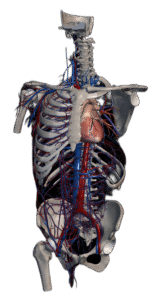
How to Help Blood Flow Freely and Revitalize Tissues
Hello, colleagues! We know how important muscles and fascia are, but there is another system without which our body cannot function – the circulatory system. Understanding how it works helps us to more deeply comprehend how massage affects tissue health, relieves fatigue, and accelerates recovery. Let’s delve into the basics of blood circulation and its connection to our practice.
1. What is Blood and Why is it Needed?
Blood is a liquid tissue that performs many vital functions:
Transport: Delivers oxygen (O2) from the lungs to cells and carries carbon dioxide (CO2) back to the lungs. Transports nutrients from the digestive system to all tissues. Removes metabolic byproducts (“waste”) to excretory organs (kidneys, liver).
Protection: Contains immune system cells (leukocytes) that fight infections. Has a clotting system (platelets) to stop bleeding.
Regulation: Participates in maintaining a constant body temperature.
What is blood made of?
Plasma: The liquid part (mostly water), in which proteins, salts, hormones, and nutrients are dissolved.
Erythrocytes (Red Blood Cells): Contain hemoglobin, which binds and transports oxygen. They give blood its red color.
Leukocytes (White Blood Cells): The “army” of our immune system.
Platelets: Small cell fragments responsible for blood clotting when a vessel is damaged.
Where is blood formed? The main blood cells are born in the red bone marrow, which is located inside some of our bones.
2. The Journey of Blood Through the Body: The Heart, Vessels, and Circuits of Circulation
Blood constantly moves through a closed system of vessels thanks to a pump – the heart.
Vessels – the “highways” for blood:
Arteries: Carry blood AWAY from the heart to organs and tissues. Their walls are thick and elastic to withstand high pressure. The largest artery is the aorta. Arteries branch into smaller arterioles.
Veins: Carry blood TO the heart from organs and tissues. Their walls are thinner, and the pressure within them is lower. They have valves that prevent the backflow of blood (especially in the legs). Small venules merge into larger veins.
Capillaries: The tiniest vessels that form a dense network in all tissues. Their walls are very thin (a single layer of cells), and it is here that exchange occurs: blood gives oxygen and nutrients to cells and picks up carbon dioxide and “waste.”
Important Concepts (Don’t confuse them!):
Arterial blood: Rich in oxygen (usually flows through the arteries of the systemic circuit and the veins of the pulmonary circuit).
Venous blood: Rich in carbon dioxide (usually flows through the veins of the systemic circuit and the arteries of the pulmonary circuit).
Artery ≠ Arterial blood! (Example: the pulmonary artery carries venous blood).
Vein ≠ Venous blood! (Example: the pulmonary veins carry arterial blood).
Blood Pressure and Velocity:
Pressure: Highest in the arteries (especially the aorta), moderate in the capillaries, and lowest in the veins.
Velocity: Highest in the arteries, lowest in the capillaries (to allow time for exchange), and moderate in the veins.
The Two Circuits of Circulation:
A. The Systemic Circuit: Nourishing the Entire Body
From the left ventricle of the heart, arterial blood is ejected into the aorta.
Through arteries and arterioles, the blood travels to all organs and tissues (except the lungs).
In the capillaries of organs and tissues, tissue gas exchange occurs: the blood releases oxygen and nutrients and picks up carbon dioxide and metabolic products. The blood becomes venous.
From the capillaries, venous blood is collected into venules, then into veins.
Through the superior and inferior vena cavae, venous blood returns to the right atrium of the heart. (From here, the blood enters the right ventricle, where the pulmonary circuit begins).
B. The Pulmonary Circuit: Oxygenation
From the right ventricle of the heart, venous blood is sent through the pulmonary trunk and pulmonary arteries to the lungs.
In the lungs, arteries branch into capillaries that densely surround the alveoli (air sacs).
In the lung capillaries, pulmonary gas exchange occurs: the blood releases carbon dioxide and becomes saturated with oxygen. The blood becomes arterial.
From the capillaries, arterial blood is collected into venules, then into the pulmonary veins.
Through four pulmonary veins, arterial blood enters the left atrium of the heart. (From here, the blood enters the left ventricle, and the cycle begins again).
The Cardiac Cycle: The heart works rhythmically: contraction (systole) is followed by relaxation (diastole). A full cycle (atrial contraction + ventricular contraction + total relaxation) takes about 0.8 seconds at rest. This rhythmic work ensures the continuous movement of blood.
3. Blood Stagnation, Muscle Tension, and the Power of Massage
Now, the most important part for us: how is this related to muscles and massage?
The Problem: A “Tight” Muscle = Poor Blood Supply
When a muscle is in a state of chronic tension (“tightness,” spasm, trigger point), its fibers are constantly contracted. Imagine squeezing a sponge – the water is forced out, and it’s difficult for new water to be absorbed. The same thing happens in a muscle:
Compression of Capillaries: Tense muscle fibers physically squeeze the tiny blood vessels within the muscle.
Impaired Inflow: Less arterial blood reaches the “tight” area, meaning less oxygen and fewer nutrients. The tissues begin to experience hypoxia (oxygen starvation).
Obstructed Outflow: It becomes harder for venous blood and lymph (another important fluid that carries away waste) to leave the tense area. Metabolic byproducts (like lactic acid) accumulate in the tissues, causing pain, fatigue, and inflammation.
How Massage Restores Blood Flow:
Massage is a powerful tool for combating stagnation:
Mechanical Effect: Massage techniques (effleurage, petrissage, etc.) directly help to “push” stagnant venous blood and lymph along the vessels, making room for fresh arterial blood to flow in. We are essentially “wringing out” the sponge and allowing it to refill.
Muscle Relaxation: By relieving muscle tension, massage eliminates the physical compression of the vessels.
Reflexive Vasodilation: The effect on the skin and muscles triggers a reflex reaction in the nervous system, leading to the widening (vasodilation) of arterioles and capillaries in the massaged area, which further increases blood flow.
Improved Tissue “Respiration”: Restoring normal blood flow provides cells with oxygen and nutrients and helps remove accumulated toxins. This contributes to reducing pain, relieving fatigue, and accelerating regeneration.
Influence on Joints and the Spine:
Good circulation is important not only for muscles but also for the structures around them:
Joint Nutrition: Joint cartilage has no blood vessels; it is nourished by synovial fluid, which in turn depends on a good blood supply to the surrounding tissues (joint capsule, ligaments, muscles). By improving blood flow around a joint, massage indirectly promotes its health.
Spinal Health: Intervertebral discs are also nourished by diffusion from surrounding tissues. Massaging the back muscles improves local circulation, which is important for maintaining the health of the discs and ligaments of the spine. Reducing muscle spasms decreases uneven load on the vertebrae.
4. Key Zones Affecting Blood Flow (What to Pay Attention To)
Although a massage therapist does not treat vascular diseases, we can work on muscles whose tension can affect the patency of major vessels or the nerves that control them. Special attention should be paid to areas where arteries and veins pass close to frequently tensed muscles:
Neck and Shoulder Region: Scalene muscles, sternocleidomastoid muscles. Vessels that supply the head and arms pass through here. Their compression (e.g., in thoracic outlet syndrome) can cause discomfort and numbness in the arms.
The zone of the seventh cervical vertebra (C7) and the base of the neck: This is a key transitional zone, a true “crossroads” where numerous muscles of the neck, shoulder girdle, and back converge and intertwine (upper trapezius, splenius muscles, levator scapulae, semispinalis, etc.). Due to a sedentary lifestyle, stress, and poor posture, significant tension and tissue thickening often form here, known as a “dowager’s hump.” The vertebral arteries, which carry blood to the posterior parts of the brain, pass through foramina in the transverse processes of the upper cervical vertebrae (usually C1-C6). However, severe chronic muscle tension and restricted mobility in the strategically important C7 zone and the entire cervico-collar region can negatively affect the overall statics of the neck, lead to a shift in load to the upper segments, and consequently, indirectly affect blood flow conditions in the vertebral arteries and the overall blood supply to the head. Working with this area (relaxing muscles, improving fascial elasticity, mobilization) is critically important for relieving local discomfort, improving posture, reducing tension headaches, and creating favorable conditions for circulation in the neck and head region.
Axillary region (armpit) and pectoralis minor muscle: Major vessels and nerves to the arm pass through this area. Tension in the pectoralis minor (common with rounded shoulders) can contribute to their compression.
Inguinal region (groin): The femoral artery and vein pass through here. Tension in the hip flexor muscles can theoretically affect blood flow in the leg.
Popliteal fossa (back of the knee): An important area for the passage of vessels and nerves of the lower leg. Tension in the hamstrings or gastrocnemius muscle can affect this area.
Lumbar and gluteal region: Deep muscles (quadratus lumborum, piriformis) can, when in spasm, affect nerves (like the sciatic nerve) that are also involved in regulating vascular tone, and can indirectly affect blood flow by altering pelvic position and the load on the lower limbs.
Important: Our job is to relieve muscle tension that may be impairing local blood flow or compressing vessels. If you suspect serious vascular problems (thrombosis, severe varicose veins, etc.), always refer the client to a doctor!
Conclusion
The circulatory system is the river of life in our body. By understanding how it works and how muscle tightness creates “dams” in its path, we can use massage even more consciously. By helping blood to circulate freely, we are not just relaxing muscles – we are improving the nutrition of all tissues, accelerating recovery, and contributing to the overall health and well-being of our clients. Work attentively, especially in key zones, and remember the power of your hands in revitalizing tissues!