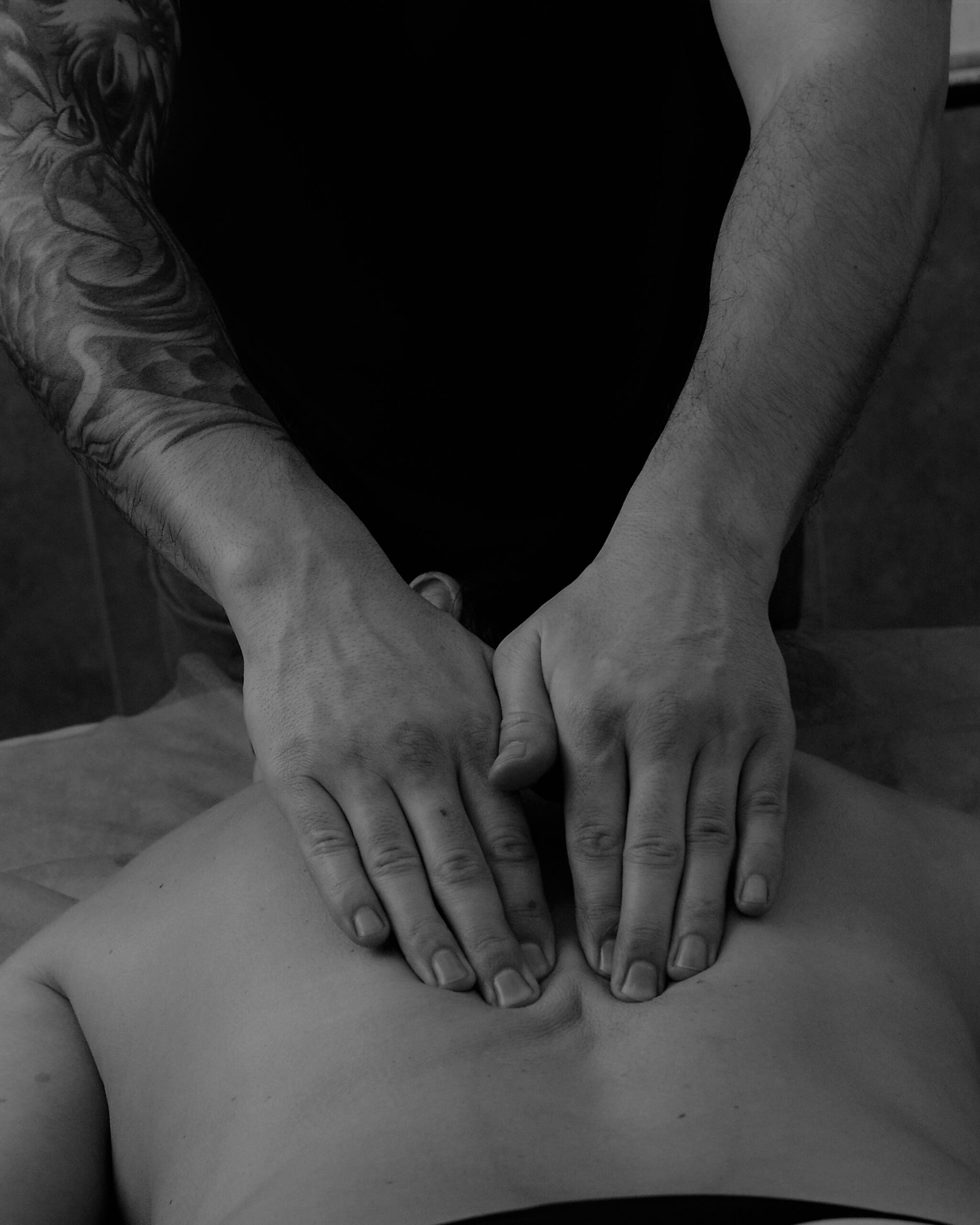
How to give a wellness back massage – free lesson with video.

The main goal of a wellness back massage is to restore overall muscle balance, eliminate muscle spasms, improve blood circulation in the muscles, vertebrae, and joints, restore neuromuscular connections, and achieve deep relaxation.
Instruction for Studying the Author’s Back Massage Technique
Duration of the Massage
- back massage 30-40 min. – the duration depends on the client’s body size and muscle condition. The session includes working on the upper part of the buttocks, back, shoulders, arms up to the elbow, the back of the neck, and the head.
- back massage 60 min. – In addition to the classic areas, it includes a massage of the entire arm, including the palms and fingers. Also, after asking the client to lie on their back, the massage therapist works on the upper chest area and provides additional massage of the neck – both the back and front parts (sternocleidomastoid muscles).
What You Need for Practical Application of the Video Lesson
To effectively master the wellness massage techniques from my video lessons, you will need the following resources and knowledge:
1. Theoretical Knowledge of Human Anatomy
To better understand how massage affects the body and improve the quality of your techniques, it’s important to study the functioning of the following body systems:
- Skeletal system
- Muscular system
- Nervous system
- Cardiovascular system
- Respiratory system
- Lymphatic system
- Integumentary system (skin)
- Fascial system
Studying the anatomy and physiology of these systems will help you apply massage techniques more consciously and achieve better results.
2. Massage Table
- Provides comfort and correct positioning of the client’s body.
- Important for the effectiveness of procedures and comfort for both parties.
- Recommended to use a table with adjustable height and soft padding.
3. Massage Oil
Used for:
- Improving the glide of hands over the skin.
- Preventing skin irritation.
- Enhancing the therapeutic effect of the massage.
Recommendations:
- Choose hypoallergenic oils.
- Prefer natural compositions without additives.
4. Massage Model
- Practicing on a real person is necessary to work out the techniques.
- Helps improve skills and receive feedback.
- Recommended to work with different body types.
Main Rules of Massage Technique Execution
1. Massage Sequence
- Start from the lower back (upper part of the buttocks) and gradually move upwards.
- Finish the massage with the neck and head.
- This sequence promotes improved blood circulation and lymph flow.
2. Direction of Movements
- Perform all pressing movements along the muscle fibers.
- This ensures maximum therapeutic effect and reduces the risk of injury.
3. Working on Tense Areas
- Tight muscles and trigger points require longer exposure.
- Apply special techniques to relax these areas.
4. Pressure Intensity
- Adjust the pressure depending on the client’s reaction.
- Ensure effectiveness without discomfort.
- Always communicate with the client about their sensations.
5. Safety
- Direct impact on intervertebral discs and joints (manipulation) is strictly prohibited.
- Work only with soft tissues—muscles and fascia.
- Avoid areas with skin damage or contraindications.
Recommendations for Learning Massage Through Video Lessons
Study Massage in Pairs
- Take turns being the massage therapist and the model.
- This will speed up the learning process and improve understanding of the techniques.
1. Theoretical Part — 1–2 days, 3–4 hours each day
- Step 1: Watch the full video of the wellness full-body massage 2–3 times to get a general idea of the technique.
- Step 2: Proceed to watch the short video lessons, numbered in the correct sequence.
- Step 3: While watching:
- Draw a diagram of the body, marking the sequence of actions.
- Write down massage techniques in simple and understandable phrases.
- This will help create your own notes and better memorize the material.
2. Practical Part — 2–3 days
- Step 1: Start practicing massage on a model, referring to the videos and your notes.
- Step 2: Conduct 1–2 full training sessions per day.
- Step 3: On the third day, try to perform the massage without prompts.
Tip: Invite new models to gain experience working with different body types.
3. Transition to Professional Work
After mastering the techniques, you are ready to work as a massage therapist. Wellness massage is in demand, and you can offer it to your clients.
Obtaining a Certificate
- Requirement: Record a video of a full back massage session and provide it for evaluation.
Additional Tips
- Communication with the Client:
- Identify possible contraindications.
- Learn about their preferences and expectations.
- Hygiene and Preparation:
- Use clean towels and sheets.
- Wash your hands before and after the session.
- Self-Development:
- Study new techniques and methods.
- Attend seminars and workshops.
Conclusion
By following this instruction and practicing regularly, you will master the author’s wellness massage technique. This will allow you to successfully apply it in your professional activities, bringing benefits to clients and gaining satisfaction from your work.
Beginning of the Massage
- Comfort and Privacy: Cover the entire body with a large towel, leaving only the part you’re working on exposed at the moment. This ensures comfort and retains warmth throughout the session.
- Preparing the Client: The client removes their upper clothing (up to the waist if necessary) and lies face down on the massage table.
Author’s (30-40 min) session of wellness back massage – full video
Pressing Muscles Through a Towel
Applying Oil and Warming Up the Back Muscles
Massage of the Sacrum and Upper Gluteal Muscles
Side back massage
Deep Working of the Back Extensors
Massage of the Upper Thoracic Region (Area Between the Shoulder Blades)
21. Deep Pressing Movements of the Thoracic Region
Starting from the lower edge of the shoulder blades, perform short deep pressing movements with soft fists on both sides of the spine. Spend a little longer in the cervical area. Short movements can be alternated with longer ones. Repeat the technique 2–3 times.
22. Working on the Muscles Between the Shoulder Blades Along the Spine
Proceed to work on the muscles between the shoulder blades. Using your thumbs, perform short pressing movements along the spine. Repeat 2–3 times on each side.
23. Working on the Rhomboid Muscles from the Spine to the Edge of the Shoulder Blade
Continue alternating work on the muscles between the shoulder blades by performing short pressing movements with your thumbs from the spine to the edge of the shoulder blade. Repeat 2–3 times on each side.
24. Gentle Effleurage Over the Entire Back
25. Working on the Rhomboid Muscles on the Other Shoulder Blade
26. Gentle Effleurage Over the Entire Back
Massage of the Trapezius Muscle
27. Working on the Upper Back and Trapezius Muscle
We begin the massage in the cervical area. First, we use soft fists to perform short pressing movements along the spine on both sides.
28. Then we move on to pressing with the thumbs to work deeper into the muscle layers of the upper thoracic region.
29. After that, we alternately massage each side of the trapezius muscle, moving from the neck to the shoulder.
30. General Smoothing of the Back
We finish this stage with gentle smoothing over the entire back.
Massage of the Scapula, Shoulder, Triceps, and Biceps
31. Working on the Muscles Around the Scapula
We begin by massaging the muscles in the scapular area. Using the palms, we perform pressing movements from the center of the back toward the shoulder. Then we proceed to more detailed work using the thumbs. We perform short presses, moving from the shoulder to the edge of the scapula. This helps to deeply affect the supraspinatus and infraspinatus muscles, as well as the teres minor muscle.
32. Grasping and Pressing the Deltoid Muscle
We move on to working on the deltoid muscle of the shoulder. Encircle the muscle with your fingers and perform presses from top to bottom, from the shoulder joint to the middle of the upper arm. Repeat the technique 5–6 times.
33. Working on the Triceps and Biceps Muscles
Triceps Massage: Grasp the triceps muscle with your fingers, performing semicircular presses from top to bottom, moving from the shoulder to the elbow. Repeat this movement 3–4 times. Then, using your thumbs, perform short pressing movements along the entire length of the triceps, repeating 2–3 times.
Biceps Massage: Proceed to the biceps. Grasp the muscle with your fingers and perform semicircular presses from top to bottom, from the shoulder to the elbow, 3–4 times.
34. General Smoothing of the Arm
Finish the massage with gentle smoothing strokes over the entire arm.
Massage of the Neck and Head
35. Working on the Neck Muscles
Using four fingers of each hand or bent fingers, perform gentle semicircular movements on both sides of the cervical vertebrae. Start from the base of the neck and gradually move up to the occipital area of the head. Repeat this technique 3–5 times.
36. Massage of the Neck Extensor Muscles and Upper Trapezius Muscle
Next, using your thumbs, work on the neck extensor muscles starting from the seventh cervical vertebra. Perform gentle semicircular movements on both sides of the spine, moving up to the occipital part of the head. Repeat 3–5 times. Then perform pressing movements on the neck extensor muscles and the upper part of the trapezius muscle, moving from the head to the shoulders. Use your palms, alternating with a soft fist and thumbs. Repeat the technique 3–5 times.
37. General Effleurage Over the Entire Back
Finish the massage with gentle smoothing strokes over the entire back.
38. Scalp Massage
Place your fingers at the base of the occiput. Using gentle semicircular movements, carefully shift the scalp, gradually moving toward the frontal area. Repeat this technique 2–3 times. Then perform voluminous semicircular smoothing movements with your fingers over the surface of the scalp and hair, moving from the forehead to the occiput. Repeat 2–3 times.
39. Gentle Tapping
Perform gentle tapping with the edge of your palm or a soft fist on the extensor muscles, trapezius muscle, and shoulders.
Back massage is complete.
Useful articles about massage
Why back massage is important
Back Massage – One of the Most Popular Wellness Massage Types