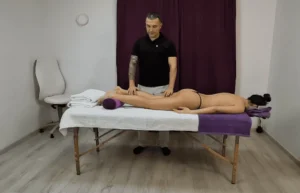
The foundation of a high-quality deep tissue session begins with the ergonomics of your workspace. Proper table height adjustment is not just about the therapist’s health; it is the key to deep, effective impact. The optimal setup allows the specialist to work in a state of flow, using natural body weight to make every movement intentional and powerful without unnecessary strain.
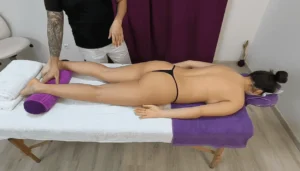
The secret to total relaxation lies in the details. We pay special attention to physiological comfort—from using specific bolsters to relieve joint pressure to the precise alignment of the arms and head. This allows the client to fully trust the therapist’s hands, enabling the muscles to prepare for deep work without defensive resistance.
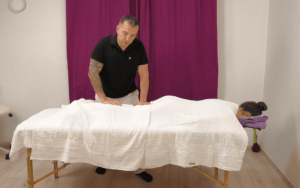
In this lesson, we explore a unique deep-pressure technique that differs fundamentally from traditional high-force massage. Instead of straining the arms, the therapist uses a gentle “leaning” motion, creating a smooth and profound contact. Working through fabric provides the essential stability required for deep relaxation and primes the body for the next stage.
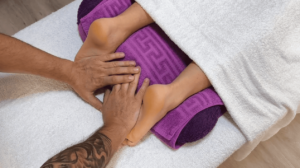
Massage begins at the foundation of our body—the feet. Working smoothly with reflexology zones and the base of the foot helps trigger relaxation processes throughout the entire organism. We navigate key points, focusing on the most sensitive areas to create a sensation of lightness right from the start of the session.
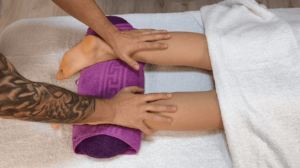
Working the calf muscles requires both delicacy and precision. We follow the primary energetic and muscular lines while avoiding pressure on sensitive joint areas. This approach effectively relieves tension and prepares the lower extremities for more intensive work.
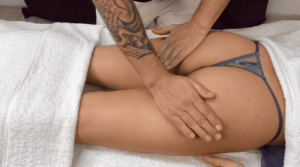
Handling large muscle groups requires true craftsmanship. In this section of the lesson, we demonstrate how to effectively use body mass for a deep dive into the tissues of the thighs and glutes. This helps release long-standing tension and improves overall body mobility while maintaining complete comfort for the client.
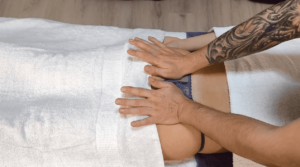
Transitioning to the pelvic region is a vital stage in the massage structure. We focus on muscle attachment points and delicate work with the sacral zone. Understanding anatomical features and the correct pressure vector allows the therapist to work deeply and safely, respecting the natural curves of the human body.
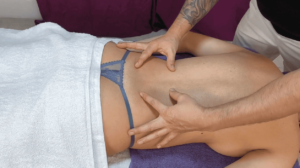
The lumbar region requires exceptional softness and attention. Here, we learn to work intuitively, using only the necessary degree of pressure to avoid overloading unprotected areas. This creates the groundwork for deep relaxation across the entire spine.
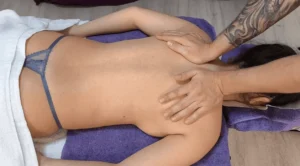
The thoracic region often bears the primary burden of daily life. By gradually increasing intensity, we work the muscular corset along the spine. This helps “open” the breath and free the back from accumulated heaviness.
Проснувшись однажды утром после беспокойного сна, Грегор Замза обнаружил, что он у себя в постели превратился в страшное насекомое.
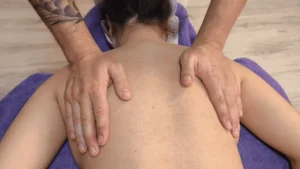
Synchronized work in the shoulder blade area helps balance the client’s state. We show how to correctly distribute pressure to cover the entire shoulder girdle, returning natural mobility and lightness to the arms and shoulders.
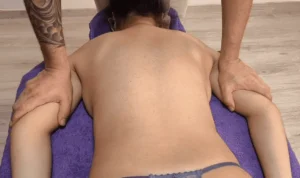
The hands of the therapist and the client enter a special resonance. We break down the anatomical nuances of working with the muscles of the upper arm and forearm, considering the unique structure of the tissues. This avoids discomfort and achieves a deep therapeutic effect even in the most tense areas.
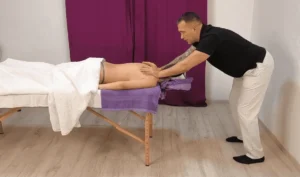
The final chord of the pressing sequence is working the “stress zone.” We use specialized body positioning for the therapist to reach the deepest layers of the trapezius muscle. This is the final preparation stage, after which the client’s body becomes perfectly pliable for the subsequent oil massage.
A written guide is just the beginning. To truly master the rhythm, depth, and nuances of deep tissue work, you need to witness the process in action.
In my comprehensive Full Body Deep Tissue Massage video course, I provide a concentrate of 20 years of real-world clinical experience. You won’t find any “exotic TikTok moves” here that look good on camera but fail in professional practice. I teach only the proven, daily-applied signature techniques developed by Aleksandr.
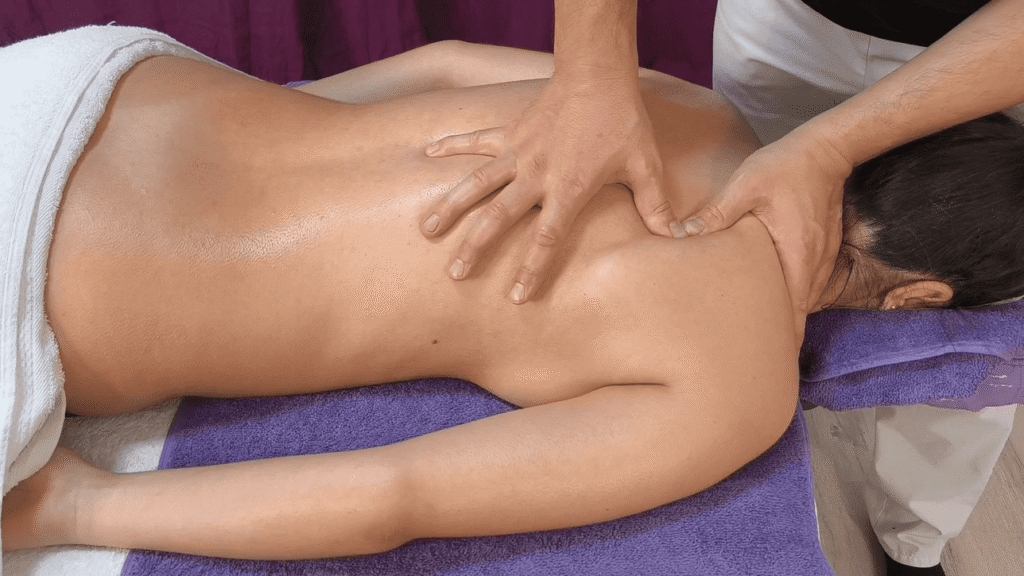
The ultimate masterclass: deep work on all muscle groups, fascia, and attachments for maximum therapeutic effect
© 2026 massagelessons.org. All rights reserved. Represented by: Oleksandr Syrota Support: support@massagelessons.org Payments are processed via Lava.top / Stripe.